Meme Coin Trading, Lessons From a Top Trader
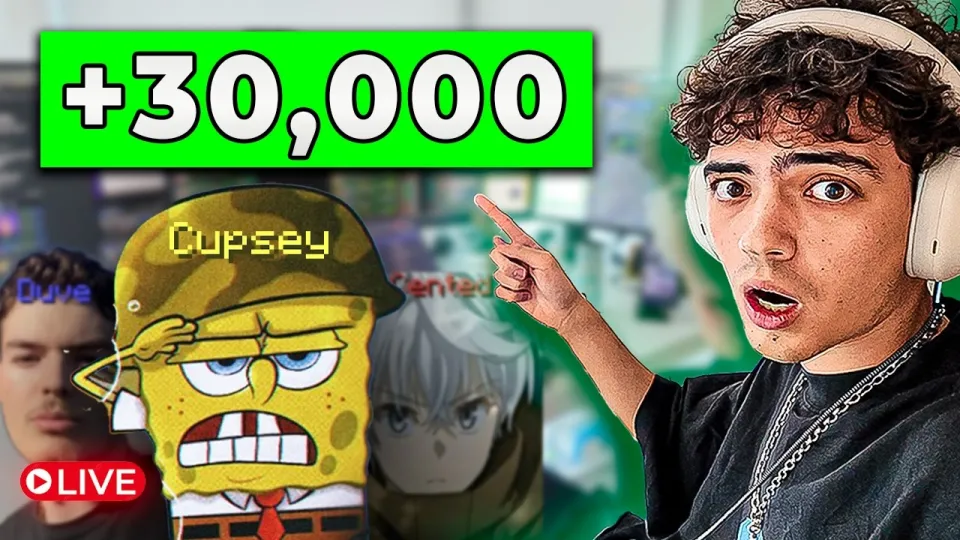
Video: I Traded With The World’s #1 Memecoin Trader
Need articles like this for your video? They help promote it on YouTube and Google — order them in the Telegram bot @sat_sit_bot. Articles with your video embedded are written and posted by the bot itself — on popular topical sites (no ads). Try it free: 50 articles on us.
· based on the channel Ethan Prosper
A meme coin is a cryptocurrency whose value rests almost entirely on community attention, narrative and liquidity rather than on cash flow or product revenue. Trading them profitably is less about picking the "right" project and more about speed, position sizing and exiting before the crowd. The format is well illustrated by the Ethan Prosper session "I Traded With The World's #1 Memecoin Trader," where a guest trader runs live Solana plays from a tracked wallet — you can follow the same terminal setup via registration on the Padre trading terminal used in the stream.
What a meme coin actually is and why it moves
A meme coin is a token with no underlying business, launched cheaply and traded on narrative alone. On Solana, most new ones appear through launchpads such as Pump.fun, where anyone can mint a token in minutes and a bonding curve supplies early liquidity until it graduates to a decentralized exchange.
That structure explains the price behaviour:
- Supply is effectively unlimited — thousands of new tokens launch daily, so attention is the scarce resource.
- Liquidity is thin at launch, so small buys move price violently in both directions.
- The order book is really a queue of bots and full-time traders, not patient investors.
- Holding periods are measured in minutes; a token that survives an hour is already old.
The result is an asset class where the average participant loses and a small group of fast, disciplined operators extracts most of the profit.
Inside the session: trades, numbers and tools
The video is a live trading recap rather than a lecture, and the numbers are the point. Across the run, the duo worked through Lobo and a token referred to as 1%, Cheese Coin, an Elon/Grok-themed coin, Magic Internet Money and Mosaic AI. Reported results included roughly +200 SOL on the opening plays and about +80 SOL on the Mosaic AI entry, with a +$15K print on the Grok-themed trade — figures viewers reacted to as "350+ SOL," which tells you how large the swings were relative to a normal retail account.
Mechanically, the workflow is consistent:
- Terminal first. New pairs are screened in a trading terminal that aggregates launchpad feeds, charts and one-click execution.
- Wallet tracking. The guest's Solana address is public, so his entries are visible on-chain; the host's own wallet is published too, which makes the session auditable after the fact.
- Narrative filter. Names tied to a live story — an Elon Musk post, an AI release, a running joke — get priority over anonymous tickers.
- Fast exits. Positions that do not immediately attract volume are cut rather than averaged down.
Why speed trading is the hardest style in crypto
Speed trading new pairs is a full-time job with a brutal hit rate, and it is the single most misunderstood part of the meme coin meta. The traders who do it sit at the screen for ten or more hours a day, watch dozens of launches, and take many small losses to catch a few outsized winners. One widely liked comment under the video makes the point bluntly: these are the speed traders, this is the most difficult style possible, and nobody has to trade this way to make money.
There is also a structural critique worth taking seriously. Another popular reaction argued that these are the accounts that run multiple wallets and dump on slower buyers. That is not a conspiracy theory — it is the natural outcome of a market where the fastest participants see the same on-chain data first and where a single wallet can be split into many to disguise size. Treat any "top trader" content as a description of an edge, not a promise of one you can copy.
A realistic checklist before you buy any meme coin
A workable meme coin process starts with rules written down before the chart appears. Use this as a filter:
- Verify the contract. Check mint authority, freeze authority and holder distribution; a token where one wallet holds 20%+ is a sell signal.
- Check liquidity depth. If a $500 buy moves price 15%, you cannot exit a real position.
- Identify the narrative. Know exactly which story the token is riding and how old it is; a narrative already trending for two days is late.
- Size for zero. Assume any single position can go to zero and cap it at a fixed small percentage of your portfolio.
- Set the exit before entry. Decide the multiple at which you take initial capital out, and honour it.
- Log every trade. Track entry, exit, thesis and outcome; without records you cannot tell skill from a lucky week.
Beginners are usually better served by larger, more liquid coins while they learn execution, because the mechanics — slippage, fees, order types — are the same and the failure mode is far less terminal.
Common questions from viewers, answered
Viewer questions around this kind of content cluster into a few recurring themes. One is the vocabulary: "faucets" in the trading-terminal context refers to reward or incentive programmes that return fees or distribute tokens for activity, not to free money. Another is access — requests to join private groups or copy-trade a specific trader's wallet are common, and the honest answer is that public wallets can be followed but not front-run; you will always fill after the original buyer.
A third theme is capital. Comments about starting with a single SOL or less are the most realistic ones in the thread, and they point at the real constraint: with a tiny balance, fees and slippage eat the edge, so the priority is building a repeatable process rather than chasing a 100x. Finally, the recurring question of "how do I pick what to ape" has no shortcut beyond the checklist above — narrative, liquidity, holder concentration and a pre-set exit.
Useful links
- Padre trading terminal — registration and bonus
- Ethan Prosper's links and resources
- Cupsey on X
- SOLMAFIA free Discord
- Pastel paid community
The takeaway
Meme coin trading is a speed and risk-management discipline, not an investment thesis, and the Ethan Prosper session shows both sides of that: enormous short-term P&L alongside the reality that this is a ten-hour-a-day, high-loss-rate occupation. The transferable lessons are unglamorous — verify contracts, size positions so a zero does not matter, respect liquidity, and write your exit before you enter. If you want to study the execution side yourself, start with the Padre terminal registration and paper-trade the workflow before risking real SOL. The channel Ethan Prosper is the author of this breakdown and publishes further live recaps in the same format.
Key takeaways
- A single session on Ethan Prosper's channel produced roughly 350+ SOL across a handful of Solana meme coin trades, according to viewer reactions.
- Trades covered in the video include Lobo, Cheese Coin, an Elon/Grok-themed token, Magic Internet Money, and Mosaic AI, with reported gains of +200 SOL and +80 SOL on individual plays.
- The guest trader, Cupsey, works from a Solana wallet tracked publicly on-chain, so every entry and exit can be verified after the fact.
- Speed trading new pairs on Pump.fun-style launches is the hardest style in crypto: 10+ hour screen days, constant monitoring, and fast invalidation of losing positions.
- Copy-trading or following KOL wallets is not a shortcut: by the time a call is public, the price has usually already moved.
Source: I Traded With The World’s #1 Memecoin Trader · Markdown version
Questions & answers
Is meme coin trading actually profitable for beginners?
For most beginners, no. The edge in new-pair trading comes from speed, tooling and screen time, and thin liquidity means late buyers absorb the losses of early ones. A realistic starting point is trading larger, more liquid coins while you learn execution, and treating meme coins as a small, expendable portion of the portfolio.
What does copy-trading a top trader's wallet involve?
You can follow a public Solana address and mirror its buys, but you will always fill after the original transaction and at a worse price. In fast markets the gap can be the entire profit margin. Wallet tracking is more useful as research — seeing how a skilled trader sizes and exits — than as an automated strategy.
How much capital do you need to start trading meme coins?
There is no minimum, but very small balances are punished by fees and slippage, which can consume a meaningful share of a trade. A practical approach is to fund an amount you are fully prepared to lose, keep each position a fixed small percentage of it, and only scale up after you have a documented record of results.
What should I check before buying a new Solana token?
Verify that mint and freeze authority are revoked, look at holder concentration for large single wallets, and confirm liquidity is deep enough that your exit will not crater the price. Then identify the specific narrative driving attention and set your exit target before you enter.